Address
251 Little Falls Drive, Wilmington, DE 19808, United States


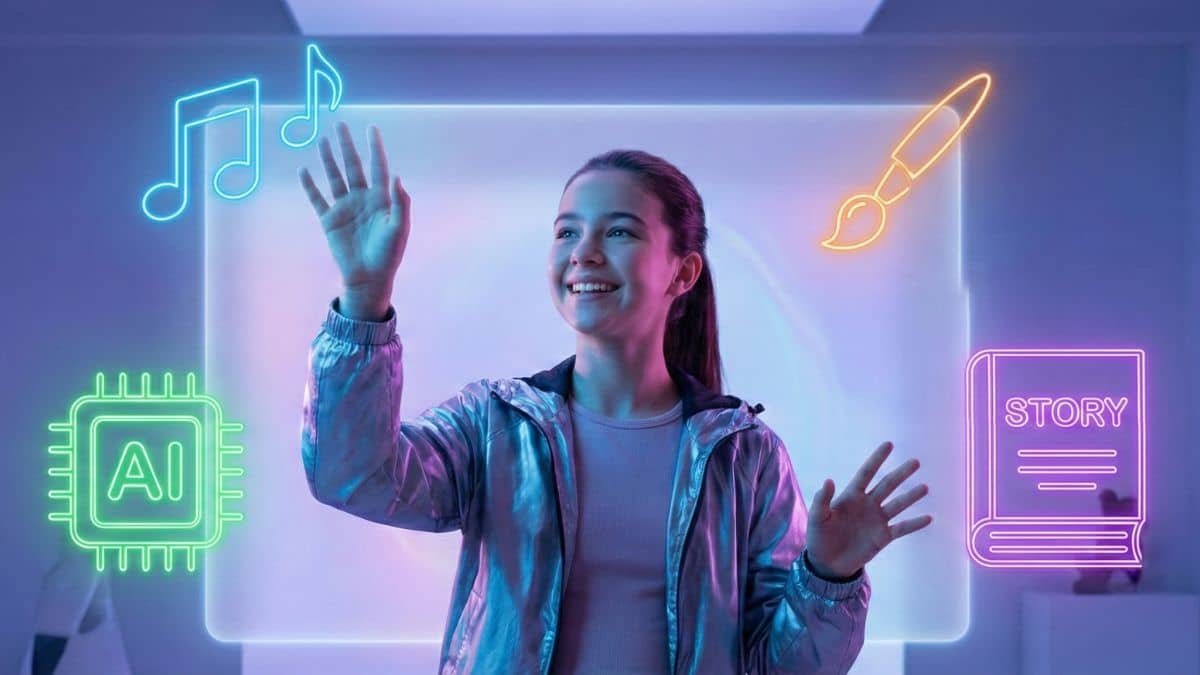
What if your child could compose music, paint a masterpiece, or tell epic stories, with a little help from AI? Creative AI for kids is more than a trend, it’s a powerful way to inspire imagination and self-expression. From drawing apps to music-making tools, AI is giving children exciting ways to explore their creative side. In this article, you’ll discover how creative AI helps kids unlock new skills in art, music, and storytelling, turning screen time into something meaningful and magical.
Table of Contents
Why creative expression matters in early childhood
Creativity isn’t just for artists, it’s a crucial part of childhood development. When kids paint, sing, or tell stories, they’re not just having fun; they’re building problem-solving skills, emotional awareness, and confidence. Art and music allow children to explore their inner worlds and communicate ideas in ways that words alone often can’t.
In today’s digital age, creativity is taking on new forms, especially with the rise of artificial intelligence. AI is no longer just about robots and coding; it’s becoming a powerful tool to help kids explore, imagine, and create in ways never before possible.
The rise of AI in creative education
AI is rapidly entering classrooms and homes as a learning companion. But beyond math and language apps, AI is now being used to encourage creativity in young minds. Interactive platforms are enabling children to draw, compose, and write with smart systems that adapt to their interests and skill levels.
Rather than replacing creativity, AI is expanding its boundaries. It gives children access to tools that were once out of reach, like composing music without instruments or generating illustrations with a few simple prompts. This isn’t science fiction; it’s happening right now.
Curious about practical examples? Take a look at AI projects that enhance school learning to see how classrooms are embracing this revolution.
How AI encourages artistic exploration
Drawing & painting with AI tools
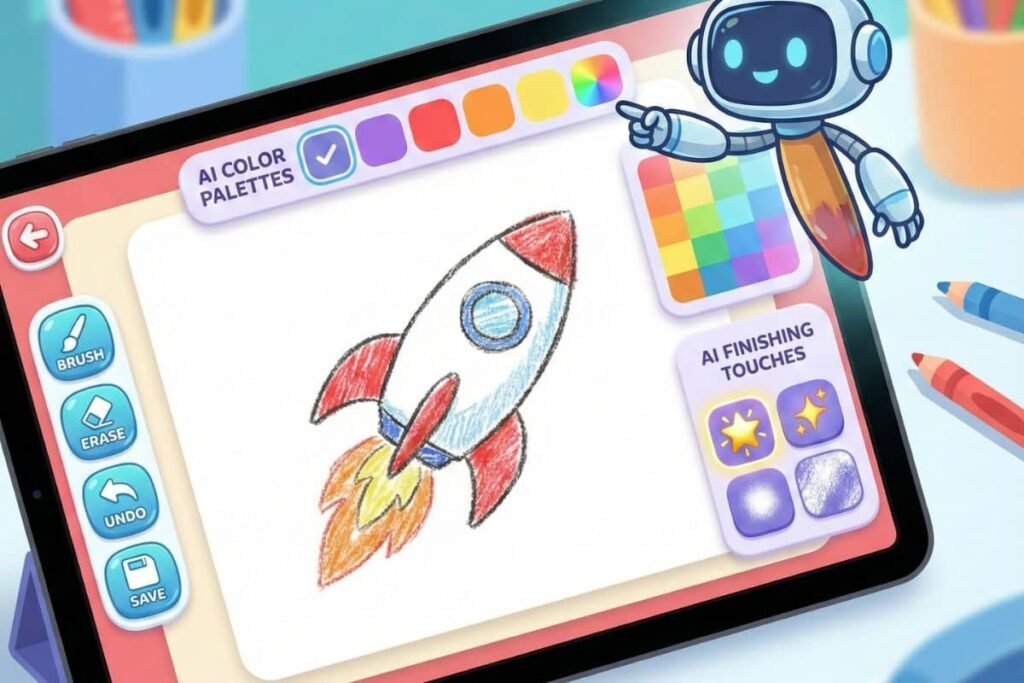
AI-powered drawing apps are helping kids bring their imaginations to life. With platforms that turn sketches into polished images or suggest enhancements in real-time, young artists can experiment freely without fear of making mistakes.
For instance, some apps let children select a theme, like animals or outer space and the AI suggests styles, color palettes, or even finishes their drawings in different artistic modes like watercolor or comic-style.
Generating visual stories with AI
AI is also fueling a new wave of visual storytelling. Tools like Teachable Machine by Google allow kids to train simple AI models using photos or drawings. They can create interactive characters or build stories that respond to their movements or sounds.
This hands-on approach not only enhances creativity but introduces children to how AI works, bridging the gap between art and technology.
AI in music: Turning kids into composers
Beat-making & melody tools made for kids
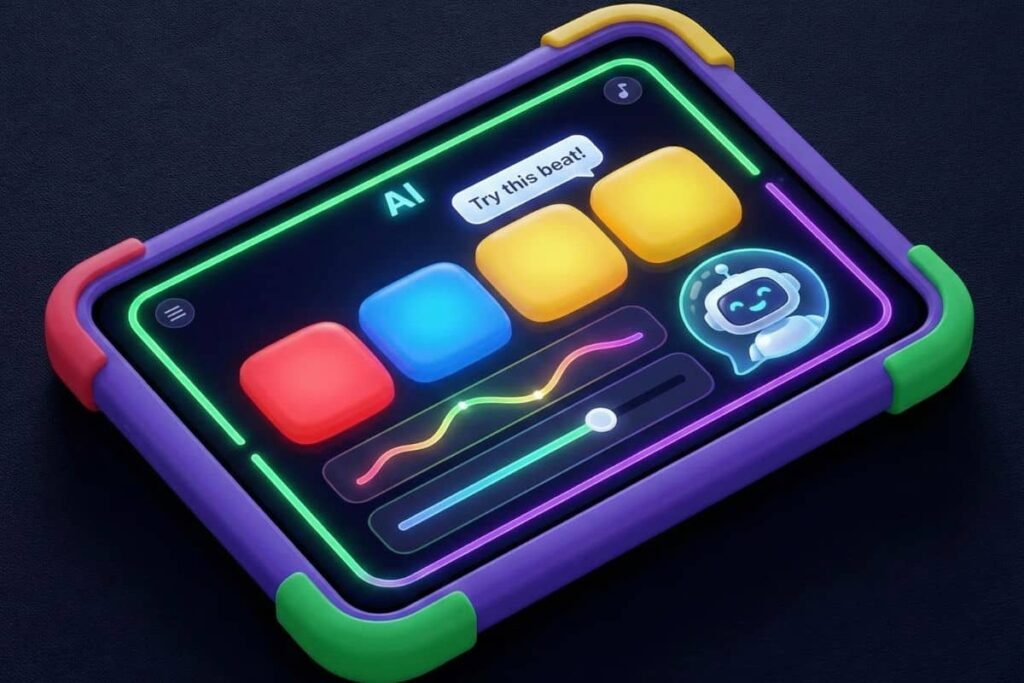
Have you ever seen a child tap out a beat on a table and call it music? With AI-powered music apps, that beat can become a full-fledged song. These tools let kids layer rhythms, add instruments, and even get feedback from the AI on how to improve their creations.
Instead of needing years of music theory, kids can dive straight into composing. AI tools translate their ideas into real-time audio, allowing for immediate creativity and learning through play.
Personalized music learning with AI
Not every child learns the same way. Some pick up melodies by ear, while others need visuals or repetition. AI music tools adapt to individual learning styles. They track progress and suggest new exercises or challenges tailored to the child’s pace and interests.
These adaptive platforms help kids stay motivated and make music education more inclusive, especially for those who might not have access to traditional lessons or instruments at home.
For more on this, check out our guide to AI learning for kids, where we explore how personalized education is evolving.
Nurturing storytelling through AI assistance
Voice-activated story generators & prompts
Storytelling is one of the oldest forms of human expression. AI is bringing it into the digital age through interactive platforms where children speak a few words and the AI builds a story around them.
These voice-based tools encourage kids to articulate their ideas while the AI fills in gaps, adds twists, or even animates the results. It’s especially helpful for children who might struggle with writing or typing but have vivid imaginations.
Interactive AI co-writing platforms for kids
Another exciting development is co-writing tools. Kids start a story, and the AI acts as a collaborative partner, suggesting dialogue, plot twists, or even poetic phrasing. It turns storytelling into a game, making writing feel less like homework and more like play.
By nurturing both language and creativity, these tools help young storytellers develop narrative skills and emotional expression in a supportive environment.
Creative AI for kids: Key benefits of AI-driven learning
The advantages of using AI for creative exploration are numerous. For one, it builds digital fluency, a crucial skill for future careers. But more importantly, it empowers kids to take ownership of their ideas and see them come to life.
- Confidence: Kids feel proud of what they create, boosting self-esteem.
- Curiosity: AI encourages experimentation without fear of failure.
- Accessibility: Tools can adapt to different needs and learning styles.
- Engagement: Interactive, gamified platforms hold kids’ attention longer.
Used wisely, AI becomes not just a teacher, but a creative companion.
Challenges and concerns parents should know
Of course, no technology is without its concerns. Parents and educators should be mindful of screen time, data privacy, and the quality of AI-generated content. Not all apps are created equal, some may reinforce clichés or offer little educational value.
Supervision and intentional use are key. Look for platforms that are age-appropriate, ad-free, and emphasize creativity over consumption. It’s also important to talk with kids about what they’re making and learning, so technology remains a shared experience, not a solitary one.
What the future holds for creative AI for kids
As AI continues to evolve, the possibilities for childhood creativity are endless. Imagine AI art coaches, music jam sessions with virtual bands, or entire fantasy worlds built from a child’s imagination and a few spoken words.
But even as the tech gets better, the core goal remains the same: to inspire kids to think differently, explore boldly, and express themselves fully. With the right tools and guidance, AI can help raise a new generation of confident, creative thinkers.
With the rise of creative AI for kids, technology is becoming a true partner in learning and imagination. From painting digital masterpieces to composing original songs, kids now have access to powerful tools that encourage expression. By choosing the right creative apps for kids and staying engaged with their journey, parents can help raise confident, curious creators ready to shape the future.